
If you’re ordering roll labels for the first time, “unwind direction” can sound like one of those overly technical print terms that somehow becomes your problem.
Unfortunately… it can be your problem. But—it’s an easy one to solve once you know how to make the right choice.
Because if the unwind direction is wrong, labels can apply:
- upside down
- sideways
- off-centre
- or not properly at all
The good news is that unwind direction is actually simple once you understand what it means.
Let’s break it down.
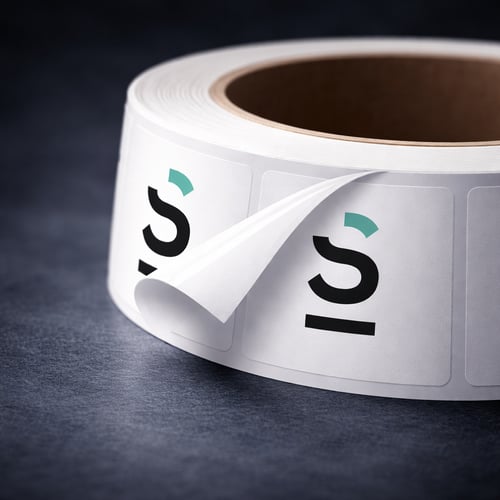
First: What Are Roll Labels?
Two products may use the same label material but require completely different adhesives.
Why?
Because adhesive performance depends on:
- Surface type (plastic, glass, metal)
- Surface energy (how easily something bonds)
- Environmental conditions (cold, moisture, chemicals)
- Handling (squeezing, abrasion, transport)
That’s why application-based selection is often the most reliable approach.
Roll labels are labels supplied on a continuous roll rather than on sheets.
They’re commonly used when labels are:
- applied by machine
- printed in-house using label printers
- used in medium to high-volume production environments
Think:
- food and beverage packaging
- personal care products
- industrial containers
- shipping and logistics
If you’re using a label applicator or a dedicated label printer, you’re almost always working with roll labels.
And if you’re working with roll labels, unwind direction matters.
What Is Unwind Direction?
Unwind direction describes how labels come off the roll as they feed through a printer or applicator.
The easiest way to picture it:
Think of a roll of paper towels.
Depending on how the roll is positioned, the sheet can come:
- over the top
- from underneath
- rotated to one side
Labels work exactly the same way—except your machine cares a lot more than your kitchen does.
The direction the label feeds determines how it lands on the product.
Why Unwind Direction Matters
Unwind direction controls:
- how the label enters the machine
- which edge applies first
- whether the artwork lands upright on the package
If the unwind direction is incorrect, labels may be:
- upside down
- rotated 90° or 180°
- misaligned during application
That usually means:
delays
reprints
wasted inventory
preventable frustration
Tiny detail. Expensive mistake.
Even experienced production teams confirm unwind direction before ordering—because fixing it later is far more painful than checking it upfront.
The 8 Standard Unwind Directions
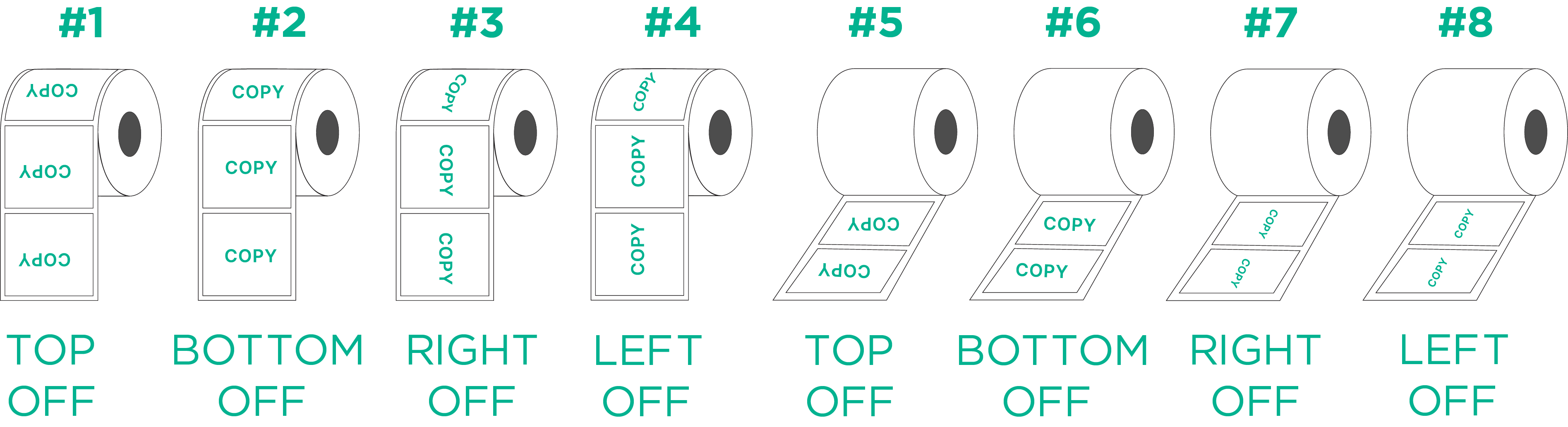
There are 8 standard unwind directions in label printing.
They’re based on two things:
1. Which Edge Comes Off First
This is called the leading edge.
Examples:
- Top Off
- Bottom Off
- Left Off
- Right Off
If the top of the label comes off first, it’s “Top Off.”
Simple.
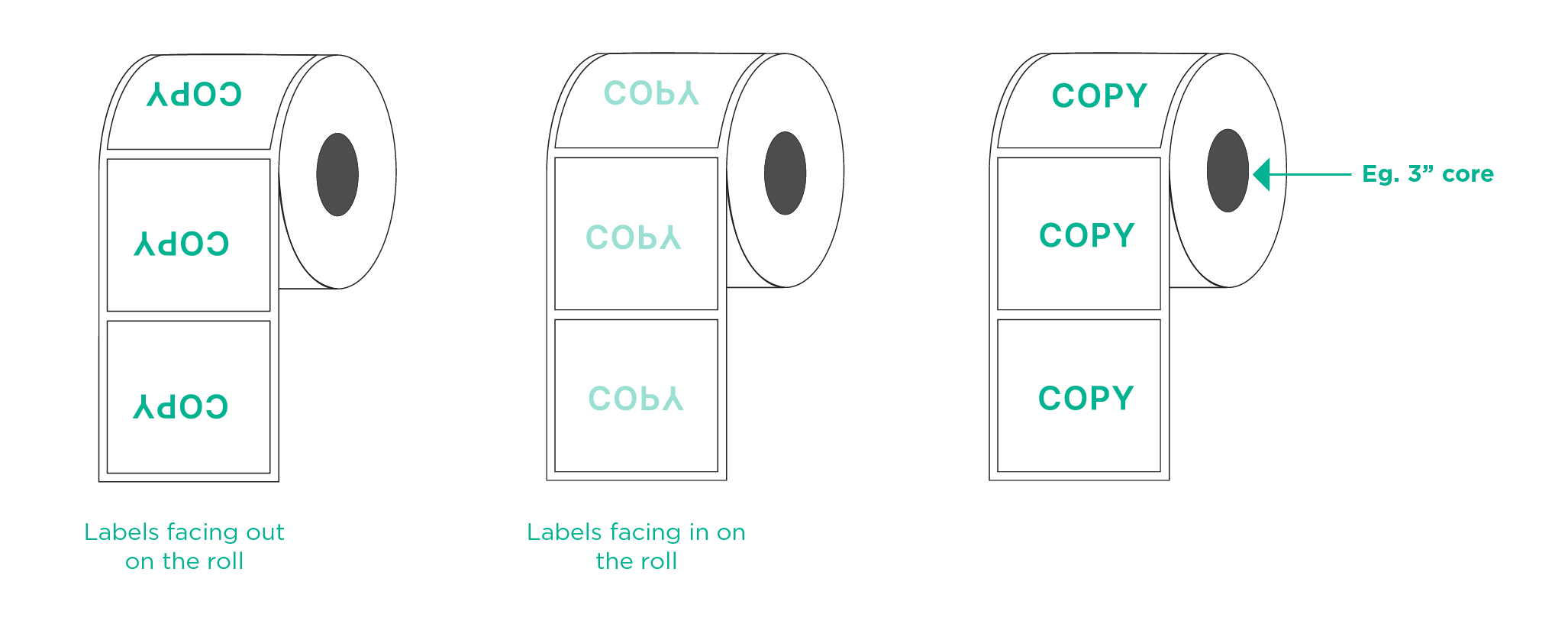
2. Wound Out vs Wound In
This refers to where the printed label sits on the roll.
Wound Out
The printed label faces outward and is visible on the outside of the roll.
Wound In
The liner faces outward and the printed label is wrapped inside.
Both are common—your applicator determines which one is required.
There are four directions for each, giving you eight total unwind options. Avery notes the same distinction: unwind direction matters critically for machine application, while hand application is far less sensitive.
Think of It Like This
The easiest rule to remember:
The leading edge is the part of the label that touches the product first.
So:
- Top Off = top hits first
- Bottom Off = bottom hits first
- Right Off = right side hits first
- Left Off = left side hits first
That one concept solves most of the confusion.
Machine Application vs Hand Application
Using an Applicator?
Then unwind direction is critical.
Your machine expects labels to feed a specific way.
It cannot politely “figure it out.”
If the roll is wrong, labels apply wrong.
This is why your label supplier will usually ask for:
- applicator make and model
- printer type
- how the label is applied
Avery specifically calls this out: if labels are applied by hand, unwind is not critical; if applied by machine, it is critical.
Applying Labels by Hand?
Much less important.
You can rotate the roll as needed and adjust manually.
That said:
- consistency still improves speed
- it helps future automation
- it prevents confusion when scaling production later
Most Common Ordering Mistake
The most common mistake is assuming unwind direction is based on how the roll looks in your hand.
It isn’t.
Unwind direction is determined by how the label is oriented at the exact moment it’s applied to the product.
Always confirm based on the applicator—not the roll itself.
That distinction saves a shocking number of headaches.
Core Size Matters Too
While we’re here, there’s another spec that often gets confused with unwind direction:
Core Size
Core size refers to the diameter of the cardboard center of the roll.
Common sizes include:
- 1” core
- 3” core
- 76mm core
Your printer or applicator may require a specific core size to fit properly.
Unwind direction and core size are separate specs—but both need to match your equipment.
No one enjoys discovering that after delivery.
How to Confirm the Right Setup
The easiest way to determine unwind direction:
Step 1
Check your applicator or printer manual
Step 2
Identify which edge needs to apply first
Step 3
Confirm whether the labels need to be wound in or wound out
Still unsure?
That’s normal. Most people don’t memorize unwind charts for fun.
(If you do, we should probably be friends.)
Not Sure Which Unwind Direction You Need?
Send us:
- your printer or applicator model
- how the label is being applied
- whether labels are applied by hand or machine
Summit’s team can help confirm the correct unwind direction before production—before it becomes a very expensive surprise.
Final Takeaway
Unwind direction is simply:
Which edge of your label comes off the roll first—and how it’s oriented when it reaches the product.
Once you understand that, the rest gets much easier.
Getting it right the first time is a lot cheaper than getting it wrong beautifully, and now you're set up for success—happy labelling!
Updated April 2026.
Follow Us